

Why it’s Important to Release Sherrone Moore From the Burden of Us


When the news about Michigan head football coach Sherrone Moore broke, my first reaction wasn’t shock, it was annoyance. Because as a Black woman, I already knew what was coming.
The Facebook threads, TikTok rants and IG memes with quiet disappointment turned inward, heavy with the familiar references or whispers: “This wouldn’t have happened if he had a Black wife.”
or even, “If the mistress was Black she wouldn’t have exposed him.”
These predictable responses doesn’t come from outside our community. It always comes from within. From Black women who are tired, protective, and often disappointed by the men we’re told to celebrate as symbols of progress.
Moore’s rise as a 39-year-old Black man becoming head coach at a historic Division I program, felt significant. It felt like progress. It felt like one of those moments we’re trained to root for harder because so few Black men are given that kind of opportunity. I understand why many of us felt pride. But lately I’ve learned that pride does not require ownership. And representation does not mean responsibility.
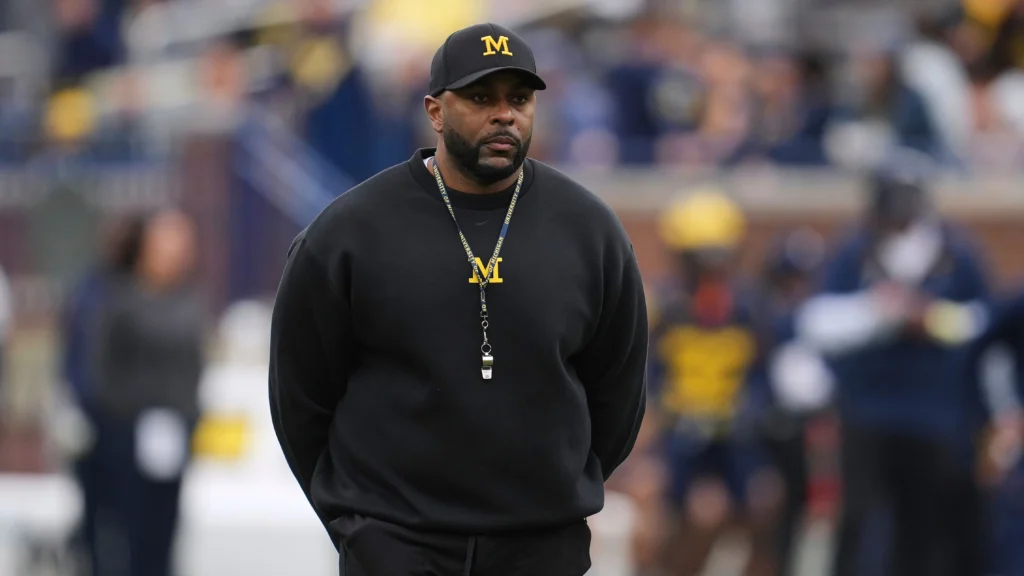
According to public reports and legal filings, Moore engaged in a workplace affair with a significantly younger subordinate. He was allegedly warned multiple times about the inappropriateness of the relationship. He was reportedly instructed to move the employee to another department. He refused. When told the relationship could no longer continue under his supervision, the situation escalated rather than corrected. These were not isolated missteps. They were repeated choices.
What ultimately stripped this situation of any gray area for me wasn’t the affair itself, it was what happened after it was exposed.
Affairs, while wrong, are unfortunately all too common among powerful men. What separates flawed from dangerous is how a man responds when the curtain is pulled back.
According to police reports and public accounts, once Moore’s relationship became known and professional consequences began to materialize, his response was not introspection or accountability—it was volatility. He reportedly engaged in a physical confrontation with his wife. Then, in what authorities later described as a home invasion, he allegedly went to the other woman’s residence and confronted her. During that confrontation, Moore is reported to have threatened to take his own life in front of her.
Not out of remorse, but as a form of punishment for her betrayal. It was an attempt to induce fear and to shift blame. This was his last ditch attempt to regain control over a narrative that no longer belonged to him.
As Black women, we should be honest about what that behavior represents. That wasn’t strength.That wasn’t pressure cracking a good man, it was cowardice.
Threatening self-harm in front of someone you have already wronged is not accountability, it is emotional manipulation. It is a refusal to sit alone with consequences. It is an attempt to silence exposure through fear rather than face truth with dignity.
A man with foundational integrity does not implode like this when exposed. A leader with moral grounding does not weaponize his own life to punish someone else. A man worthy of authority does not escalate harm when his entitlement is challenged.
Yet when this story broke, many Black women turned inward. We questioned whether his interracial marriage played a role. Some suggested a Black woman would have “kept him in line.”
Others spoke as if we had lost something, as though we missed out on a strong Black leader because he chose someone outside the race.
That narrative is not only inaccurate, it is grossly unfair to us. Black women are not moral lifelines for broken men. We are not responsible for managing character, preventing corruption, or absorbing the fallout of choices we did not make.


A man who lacks integrity will lack it regardless of who he marries. Infidelity does not disappear because the wife is Black. Abuse of power does not soften because the household looks like ours.
In short, we didn’t miss out on anything.
White coaches have affairs. They get fired. They face consequences. And no one turns to white women asking what they should have done differently, or what the scandal means for white leadership as a whole. Only Black women are expected to carry that kind of collective disappointment.
There was a time when so few Black men occupied these spaces that every loss felt catastrophic. One mistake felt like it could close the door behind him and by extension, behind all of us. But that is no longer the reality, and clinging to that fear keeps us stuck in a scarcity mindset that no longer serves us.
Sherrone Moore is not “one of one.” He is not a symbol that failed us. He is a man who failed himself. So let’s release him. Release him from being a marker of Black progress. Release him from being a referendum on Black women’s worth.
Release ourselves from the idea that we are supposed to feel grief every time a Black man in power proves he was not ready for it.
This was not a Black failure—it was a character failure.